
Becoming an EMT or paramedic starts with one big step: passing the NREMT exam. This test checks whether you have the knowledge and skills to handle real emergencies. If the thought of this exam makes you nervous, you are not alone. Most students feel the same way before their first attempt.
This NREMT Study Guide is designed to help you prepare with confidence. You will learn what to study, how the exam works, and the best strategies to improve your chances of passing on your first try.
The good news is that passing on your first try is possible. You need the right plan, the right resources, and steady practice. This guide walks you through everything you need to know about the NREMT exam and how to prepare for it the smart way.
What Is the NREMT Exam? | NREMT Study Guide
The National Registry of Emergency Medical Technicians is known by its acronym, NREMT. This exam checks if you are ready to work as an EMT or paramedic. Most US states use NREMT results as part of their certification process.
The exam has two main sections:
- Cognitive Exam – A computer-based test that checks your medical knowledge.
- Psychomotor Exam – A hands-on test that checks your real-world EMT skills.
You need to pass both parts. One shows what you know. The other shows what you can actually do when it matters.
Why the NREMT Exam Matters
This exam is not just a formality. It protects patients by making sure every certified EMT has the right training. Passing it proves you can stay calm, think fast, and act correctly during emergencies.
How the NREMT Exam Format Works
Key facts about the format:
- There is a minimum and maximum number of questions on the test.
- It stops once your skill level is clear.
- You get a fixed amount of time to finish.
- Topics include airway and breathing, cardiology, trauma, medical emergencies, and EMS operations.
The psychomotor exam includes several skill stations, such as patient assessment, CPR, and splinting. You perform these tasks in front of an evaluator, just like in a real emergency.
How to Build a Smart Study Plan
A clear study plan reduces stress and keeps you on track. Trying to cram everything at once rarely works. Instead, break your preparation into smaller, steady steps. Using a reliable NREMT Study Guide can help you organize your study schedule and focus on the most important exam topics one step at a time.
Weekly Study Steps
- Create a simple weekly study calendar.
- Focus on one topic at a time.
- Study in short sessions of 30 to 45 minutes.
- Take breaks between sessions to avoid burnout.
- To keep them current, go over previous topics once a week.
Consistency beats intensity. Studying a little every day works better than one long session the night before your exam.
Best Resources for NREMT Study
Choosing the right resources can make studying much easier and more effective.
| Resource Type | Purpose |
| NREMT Practice Tests | Test your knowledge and find weak areas |
| Flashcards | Help you remember key terms quickly |
| Study Groups | Let you discuss topics with other students |
| EMT Textbooks | Provide detailed information on all topics |
| Skill Practice Videos | Show how to perform hands-on EMT skills |
Using more than one resource type helps you understand each topic from different angles, which improves memory and confidence.
Understanding Your Weak Areas
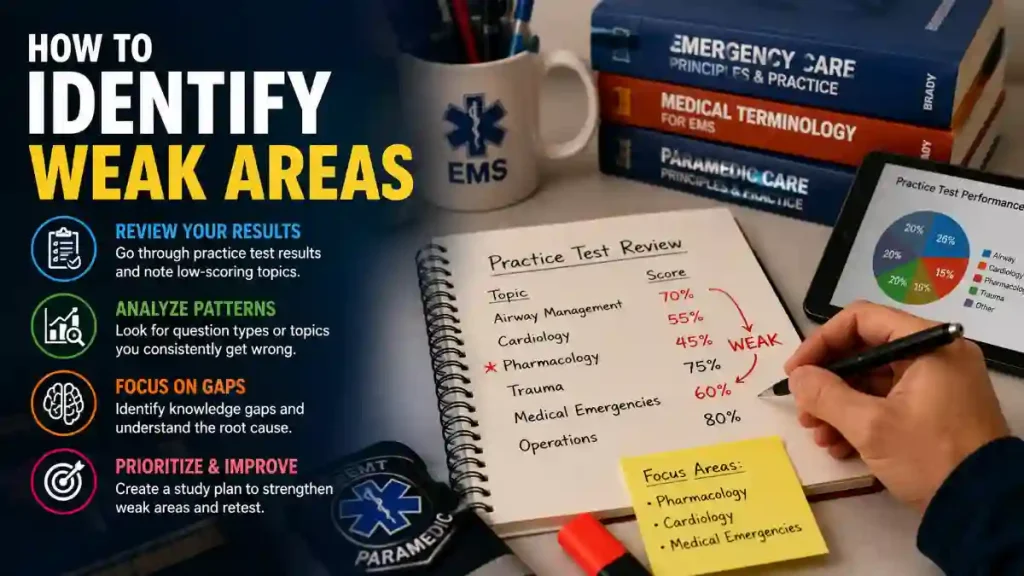
Every student has topics that feel harder than others. Finding these weak spots early saves time and stress later in your preparation. A good NREMT Study Guide can help you identify weak areas and focus on the subjects that need the most improvement before exam day.
How to Identify Weak Areas
- Before you begin your studies, take a practice exam.
- Note which topics you got wrong.
- Spend extra time reviewing those specific areas.
- Retake practice questions on the same topics after review.
Instead of devoting the same amount of time to everything, this strategy lets you concentrate your energy where it is most needed.
Common Mistakes to Avoid
Many students repeat the same mistakes while preparing for the NREMT exam. Avoiding these can significantly boost your results.
- Skipping practice tests
- Studying only the night before the exam
- Ignoring weak topics instead of reviewing them
- Not practicing hands-on skills for the psychomotor exam
- Letting stress take over instead of staying focused
Fixing these mistakes early makes a real difference in your final score and your confidence on exam day.
Test Day Tips
Even with good preparation, test day can feel stressful. These simple habits can help you stay calm and perform your best.
- Get a decent night’s sleep before the test.
- Eat a healthy breakfast for steady energy.
- To avoid hurrying, get to the test center early.
- Read each question carefully before answering.
- Do not rush through your answers.
A calm, rested mind thinks more clearly. Small habits like these can directly improve your performance under pressure.
Conclusion
Passing the NREMT exam on your first try takes preparation, not luck. Build a simple study plan, use a mix of study resources, and give extra attention to your weak areas. Avoid common mistakes, practice your hands-on skills regularly, and stay calm on test day. By following a structured NREMT Study Guide, you can prepare more effectively and improve your chances of success. With steady, consistent effort, you can walk into your NREMT exam feeling ready and confident.
FAQ
1. What is the NREMT exam?
The NREMT exam tests your emergency medical knowledge and hands-on skills. You must pass it to work as an EMT or paramedic in most US states.
2. How many parts does the NREMT exam have?
The exam has two parts: a cognitive computer-based test and a psychomotor hands-on skills test.
3. How much time should I spend studying for the NREMT test?
The amount of time you spend studying depends on your experience and background. Most students study for several weeks using a steady, daily study plan. A well-structured NREMT Study Guide can help you stay organized, track your progress, and make the most of your study time before the exam.
4. What topics are covered in the NREMT exam?
The exam covers airway and breathing, cardiology, trauma, medical emergencies, and EMS operations, among other EMT topics.
5. Can I retake the NREMT exam if I do not pass?
Yes, you can retake the exam. Most states allow retakes after a waiting period, based on NREMT’s official retake rules.
