
Starting a Bible study habit can feel overwhelming when you don’t know where to begin. With 66 books, thousands of verses, and countless study methods, it’s easy to feel lost before you even open the first page. That’s where the right Bible study guides come in; they turn confusion into a clear, simple path. Many people buy a Bible with good intentions, read a few chapters, and then quietly give up because they don’t know what “studying” the Bible actually looks like day to day. This guide breaks the process down into simple, manageable steps so you can build a bible study habit that actually sticks, without feeling like homework.
What Is a Bible Study Guide?
A bible study guide is a structured tool that helps you read, understand, and apply Scripture in an organized way. Instead of randomly flipping through pages and hoping something makes sense, a good guide gives you a clear path: what to read, what questions to ask, and how to connect the passage to your daily life.
For beginners, a study guide removes the guesswork. It turns an intimidating, 1,000-plus-page book into a series of small, achievable steps. Rather than trying to understand the entire Bible at once, you focus on one passage, one theme, or one book at a time — and let understanding build gradually.
Why Beginners Need Simple Bible Study Guides
- There’s no clear plan or structure
- Difficult passages (like genealogies or Old Testament law) come too early
- There’s no way to apply what’s being read to everyday life
- Progress feels invisible, so motivation fades
- The language and historical context feel unfamiliar
A beginner-friendly approach solves these problems by focusing on short, meaningful passages and consistent habits rather than speed or volume. Good Bible study guides are built exactly for this — they slow you down in the right way. The goal isn’t to finish the Bible fast; it’s to actually understand and remember what you read.
Common Mistakes New Bible Readers Make
- Starting in Genesis and stopping at Leviticus
- Reading without taking notes or asking questions
- Skipping prayer before and after study
- Trying to study for an hour a day right away and burning out
- Comparing their pace or knowledge to more experienced believers
- Studying without a clear method, leading to confusion
Avoiding these mistakes early makes it far more likely you’ll still be studying consistently six months from now, not just six days.
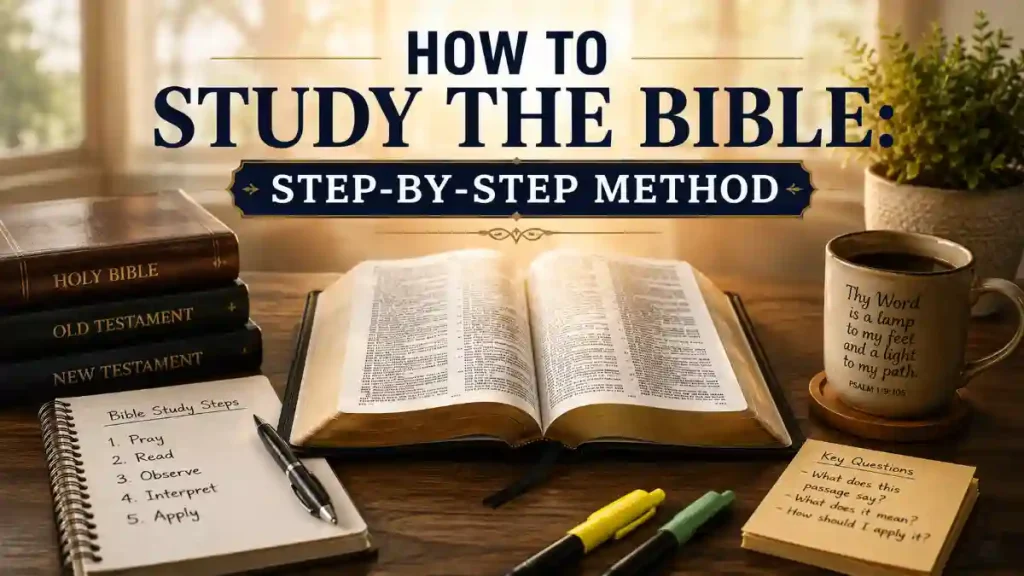
How to Study the Bible: Step-by-Step Method
A simple, repeatable process helps Bible Study Guides beginners stay consistent without feeling overwhelmed.
Step 1: Set a Realistic Time
Start with 10–15 minutes a day. Consistency matters more than duration. A short daily habit beats a long session once a week, because repetition is what actually builds understanding over time. Most Bible study guides recommend this same approach for beginners. Once the habit feels natural, you can gradually extend your study time.
Step 2: Choose a Beginner-Friendly Book to Start
The Gospel of John is one of the most recommended starting points because it’s clear, story-driven, and centers on the life of Jesus. Many Bible Study Guides suggest starting here for exactly this reason. Other beginner-friendly options include the Gospel of Mark, for its fast pace, and Philippians, for its short length and encouraging tone. Avoid starting with heavily genealogical or legal sections, as these are easier to understand later once you have more context.
Step 3: Use the SOAP Method
The SOAP method is one of the easiest frameworks to apply:
| Letter | Meaning | What to Do |
| S | Scripture | Read the passage slowly, ideally more than once |
| O | Observation | Note what stands out, repeats, or feels significant |
| A | Application | Ask how this passage applies to your life right now |
| P | Prayer | Respond to what you read in a short prayer |
This method works well for beginners because it gives structure without overcomplicating the process. You don’t need special training or theological knowledge to use it effectively.
Step 4: Keep a Study Journal
Writing down thoughts, questions, and insights helps retention and gives you something to look back on as you grow. Many Bible study guides encourage journaling for exactly this reason. Over time, a journal becomes a record of your spiritual growth, showing how your understanding has deepened and how specific passages have shaped your thinking.
Step 5: Join a Study Group
Studying with others adds accountability and different perspectives that deepen understanding. Group discussion often reveals insights you wouldn’t find studying alone, and it gives you a support system when questions or doubts come up.
Tools That Make Bible Study Easier
Having the right tools can make the difference between a study habit that sticks and one that fades after a few weeks:
- Study Bible – includes notes, maps, and historical context that clarify difficult passages
- Reading plan app – keeps you on track daily and sends reminders
- Concordance – helps you find related verses by keyword or topic
- Journal or notebook – for reflections, questions, and prayer requests
- Bible study guide – structured lessons for each book or topic, ideal for beginners
- Commentary – offers deeper explanation from theologians and scholars when a passage is unclear
You don’t need every tool at once. Start with a study Bible and a notebook, then add others as your study habit grows.
Building a Long-Term Bible Study Habit
Consistency beats intensity. A short daily reading builds more lasting understanding than occasional long sessions squeezed in once a week. Good Bible study guides are built to support this kind of steady, long-term habit. Here are a few practical ways to keep the habit alive:
- Set a fixed time each day, such as right after waking up or before bed
- Pick a quiet space free of distractions like phones or television
- Track your progress weekly rather than daily to stay motivated without pressure
- Reward small milestones, like finishing your first book of the Bible
- Be flexible — missing a day isn’t failure; it’s normal, so simply continue the next day
Building any habit takes time, and Bible study is no different. The goal is progress, not perfection.
Conclusion
Studying the Bible doesn’t have to be complicated. With the right Bible study guides, a simple method like SOAP, and a realistic daily commitment, beginners can build a habit that grows their understanding of Scripture over time. Start small, stay consistent, use tools that support your learning, and let your study deepen naturally as you go. Over weeks and months, what once felt overwhelming will start to feel like a meaningful, rewarding part of your daily routine.
FAQs
1. What is the best Bible study guide for beginners?
A guide that uses a simple structured method, like SOAP, paired with a beginner-friendly book such as John, works best for those just starting.
2. How long should a beginner study the Bible each day?
10–15 minutes a day is a realistic starting point. Consistency matters more than length, especially in the first few months.
3. Which book of the Bible should beginners start with?
The Gospel of John is commonly recommended because of its clear, narrative style focused on Jesus’s life and teachings. Mark and Philippians are also good beginner options.
4. Do I need a study Bible to start?
It’s not required, but a study Bible with notes and historical context can make understanding difficult passages much easier for beginners.
5. How can I stay consistent with Bible study?
Set a fixed daily time, keep a journal to track progress, join a study group for accountability, and treat occasional missed days as normal rather than a reason to quit. Good Bible Study Guides are built to support exactly this kind of steady, realistic routine.
