

Hey, I want to share something that happened to me recently about what a GED is.
I was chatting with a friend when I suddenly saw this term pop up, and honestly, I had no clue what it meant.
I kept wondering, “Am I missing something here?” It was a bit confusing, and I didn’t want to respond the wrong way. So, I decided to look into GED and figure out its meaning and context.
After understanding it, I realized how important it is to know these terms to avoid awkward situations in conversations. I handled it by learning the proper meaning and responding confidently, and now I feel ready whenever I see GED again in chats or on social media.
What is GED?

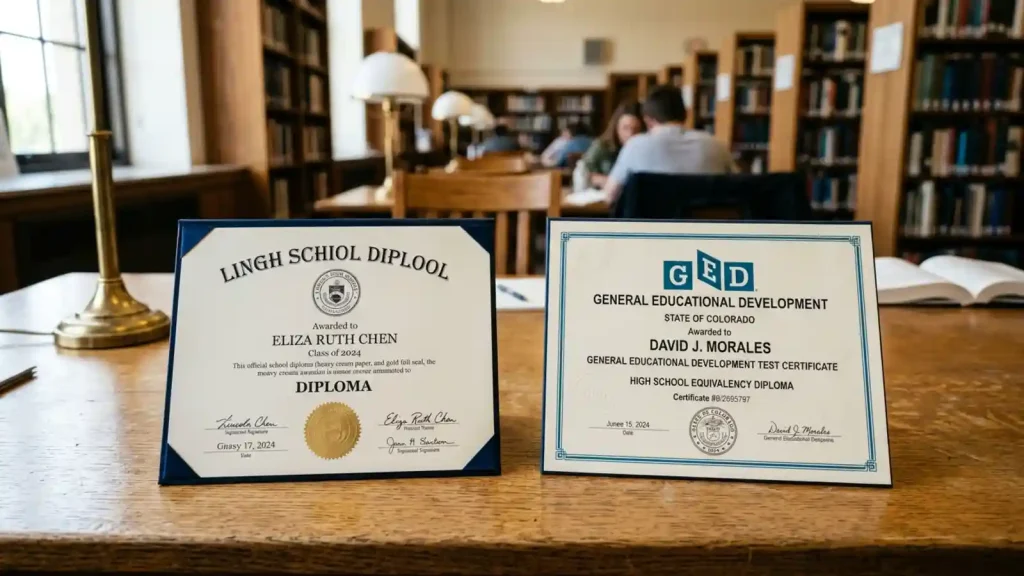
GED stands for General Educational Development. It has four parts. If you pass all four parts, you get a certificate. This paper says you know as much as a high school graduate.
The GED is not a diploma from one school. It is given by the state. Many people call it a “high school equivalency diploma.” Jobs, colleges, and other places accept it just like a normal diploma.
You do not need to sit in a classroom for years to get it. Study at your own pace. Take the test when you feel ready. This makes the GED a great fit for busy adults. It is also great for working parents. It is great for anyone who left school early.
In simple words: the GED helps you finish school without going back to classes for years.
Is a GED the Same as a High School Diploma?

Yes, in most cases. Colleges and jobs treat them the same way. A GED holder can apply for the same jobs as a diploma holder. A GED holder can also apply to the same colleges. But there are some differences in how each one is earned.
| High School Diploma | GED | |
| How you get it | 4 years of classes | Pass 4 tests |
| Time needed | Many years | A few months |
| Best for | Students in school | Adults, workers, dropouts |
| Accepted by | Colleges, jobs | Colleges, jobs, some military roles |
GED Test Structure: The Four Subjects

The GED has four parts. You can take them one at a time. You do not need to do all four on the same day. This makes it easier to study and pass each subject one step at a time.
1. Reasoning Through Language Arts (RLA)
This part checks your reading and writing. You read short passages and answer questions about them. You also write a short essay. Good grammar and clear ideas matter more than big words.
2. Mathematical Reasoning
This part checks basic math and some algebra. It also touches on simple geometry. You can use a calculator for most of it. So you do not need to memorize hard formulas.
3. Science
This part checks how well you understand science ideas. It covers life science, physical science, and earth science. You do not need to memorize facts. You just need to read the question and think it through.
4. Social Studies
This part covers history, government, and geography. It also touches on basic economics. It checks how well you understand information, not just remember it.
Each part is scored out of 200 points. You need at least 145 points to pass each one. You can retake any part you do not pass. So one bad score does not stop you from moving forward.
GED Fees: How Much Does It Cost?
The cost changes by state. Some states charge more, and some states help pay part of the fee. Here is a simple guide:
- One subject test: About $30 to $40
- All 4 subjects: About $120 to $160
- Retake: Often cheaper, and some states give free retakes
- Study material: Free options are easy to find. Paid courses can cost $20 to $200
You do not have to pay for all four tests at once. You can pay one at a time as you take each subject. This makes it easier to plan your budget. Always check your state’s GED website for the exact price near you.
Who Should Take the GED?

The GED is good for you if you:
- Left high school early
- Want a better job
- Want to join college or a trade program
- Need proof of education for the military or other papers
- Were homeschooled and need an official paper
- Are an adult who wants to set a good example for your kids
- Never got the chance to finish school due to work or family reasons
No matter your age or your reason for not finishing school, the GED gives you a fair second chance.
How to Prepare for the GED (Step-by-Step)
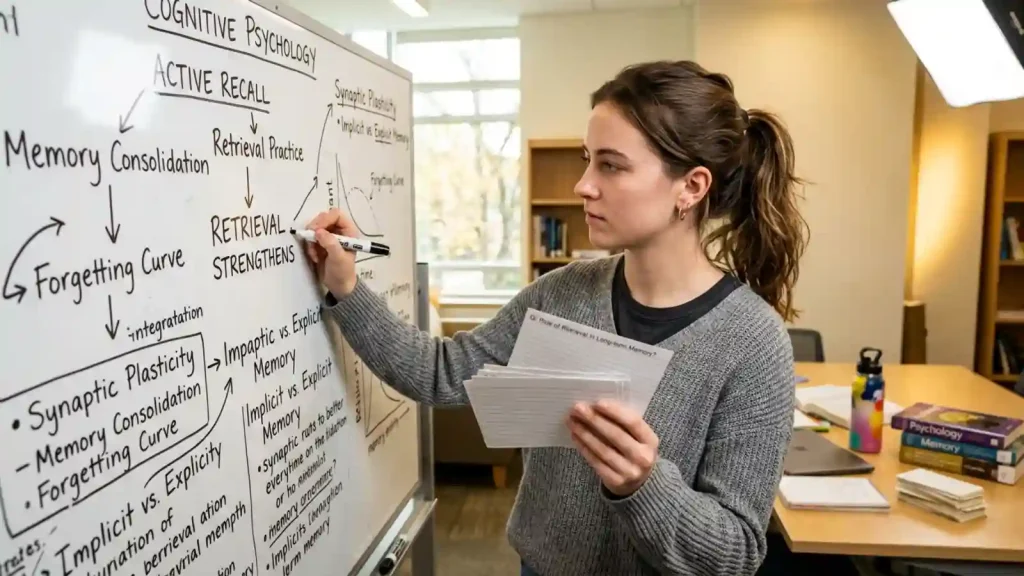
- Take a practice test. This shows you what to study.
- Start with your weak subject. Focus there first.
- Use free study tools. GED.com has free practice questions.
- Make a simple study plan. Even 3 to 4 hours a week helps a lot.
- Take one subject at a time. Do not rush all four together.
- Check your score report. It shows what to fix before you try again.
Tips to Pass the GED on Your First Try
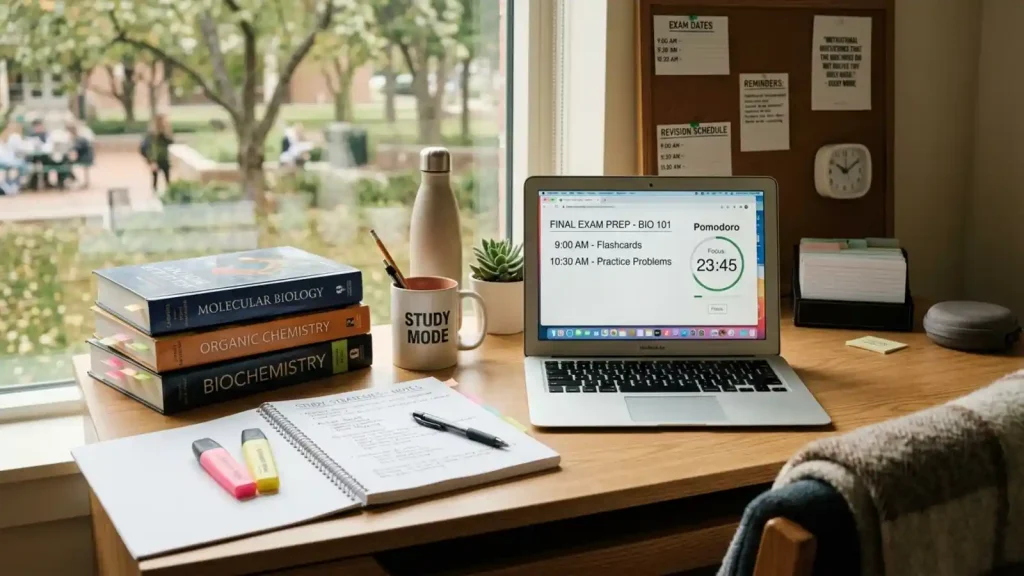
- Understand ideas, do not just memorize facts.
- For the essay, write clear points with proof. Simple words work fine.
- Practice using the on-screen calculator before test day.
- Read each question two times before you answer.
- Take practice tests with a timer to get used to the pace.
- Get a good night’s sleep before your test day.
- Bring a valid ID and arrive early at the test center.
- Stay calm. Skip hard questions first and come back to them later.
What Can You Do With a GED?

A GED can help you:
- Get a job that needs a high school diploma
- Join college, including community college
- Start trade school
- Join the military, though some branches have extra rules for GED holders
- Get financial aid for more schooling
Conclusion
The GED is a simple and trusted way to get the same value as a high school diploma. You choose your own pace, pick your subjects, and study in your own time. With steady practice, most people finish all four parts within a few months.
If you want a new job, want to join college, or just want to finish school, the GED gives you a clear path forward.
(FAQs)
1. How long does it take to get a GED?
Most people finish in 2 to 6 months. It depends on how much time you study.
2. Is the GED harder than a high school diploma?
No, it is just different. It tests your knowledge directly instead of years of classes.
3. Can I take the GED online?
Yes. Many states allow online GED tests with a webcam.
4. What happens if I fail a subject?
You can retake it. Your score report shows what to study before trying again.
5. Do colleges accept a GED?
Yes. Most colleges accept a GED just like a high school diploma.
Continue Reading:
- Permit Practice Test: Free Questions to Pass on Your First Try
- DMV Practice Test: Free Questions to Pass Your Exam on the First Try
- ASVAB Practice Test: Free Questions to Boost Your Score
