

Are you planning to take the GRE and not sure where to start? Don’t worry. This GRE Study Guide breaks everything down simply. You don’t need to memorize the whole dictionary or become a math genius. You need the right plan.
In this guide, we will solve your biggest problems: what to study, how to study, and how to manage your time on test day.

What Is the GRE Test?
GRE stands for Graduate Record Examination. This GRE Study Guide will help you understand the test and prepare for graduate-level study. Most graduate schools use this test to check if you are ready for advanced study. It has three main sections:
- Verbal Reasoning
- Quantitative Reasoning
- Analytical Writing
The test is usually taken on a computer and takes around 3 hours to complete. If you understand these three parts, you already know most of what this GRE Study Guide covers.
Each section is scored separately. Verbal and Quant are scored between 130 and 170, while Analytical Writing is scored between 0 and 6. Knowing this scoring system early helps you set a realistic target score for your dream university.
Who Needs to Take the GRE?
Students applying to master’s programs, MBA programs, or PhD programs often need GRE scores. This GRE Study Guide can help students understand the exam requirements and prepare effectively. Some universities also accept GRE scores for scholarship applications. It is important to check your target university’s requirements before you start preparing, since not all programs need the same minimum score.
GRE Test Format Overview
The GRE is a computer-adaptive test, which means your performance on early questions affects the difficulty of later ones. Understanding this format helps you approach each section with the right strategy instead of guessing randomly.
Why Do Students Find GRE Hard?
Many students struggle not because the GRE is impossible, but because they don’t have a clear plan. That is the real problem.
Common problems students face:
- Weak vocabulary for the verbal section
- Forgetting math formulas
- Poor time management during the test
- Feeling stressed about the essay section
- Not knowing which topics to prioritize
- Studying randomly without tracking progress
This guide solves each one of these problems step by step.
How to Make a Simple Study Plan
A good plan turns a hard test into a manageable one. Here is a simple weekly plan you can follow.
| Day | Subject | Time |
| Monday | Verbal Reasoning | 45 minutes |
| Tuesday | Quant Reasoning | 45 minutes |
| Wednesday | Vocabulary | 30 minutes |
| Thursday | Analytical Writing | 45 minutes |
| Friday | Practice Test | 60 minutes |
| Saturday | Review Mistakes | 30 minutes |
| Sunday | Rest | — |
This GRE Study Guide plan gives your brain enough time to learn new things and also enough time to rest. Try to follow this plan for at least 8 weeks before your test date. If your test is closer, adjust the plan and increase your daily study time slightly.
Keep a simple progress tracker; even a notebook works fine. Write down your practice scores every week. This helps you see improvement and identify which section still needs more attention.
Verbal Reasoning Tips
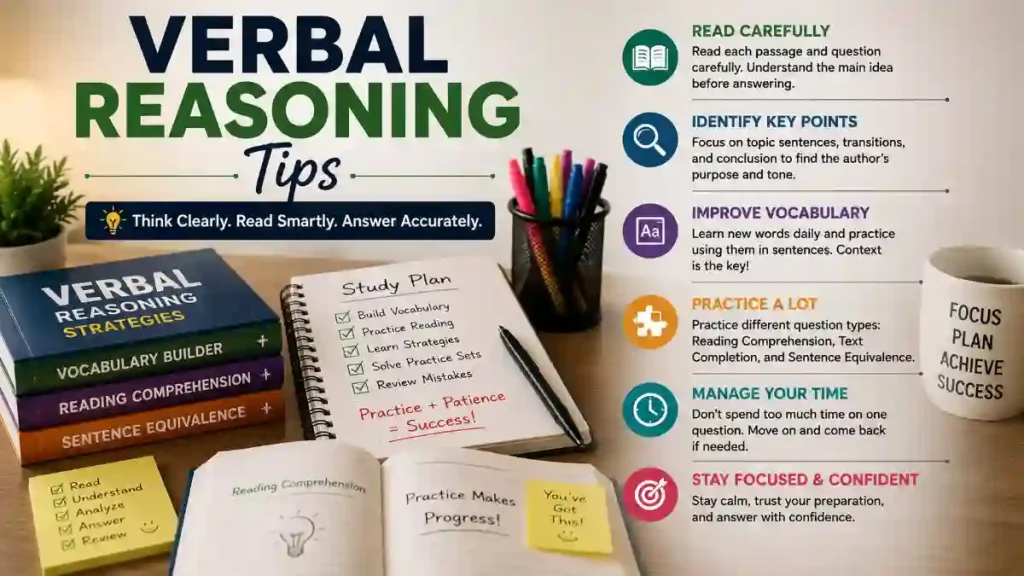
The verbal section checks reading skills and vocabulary. To improve:
- Learn 10 new words daily using flashcards
- Read editorials and academic articles
- Practice text completion questions
- Focus on understanding context, not just word meaning
- Make your own word list from mistakes
Reading a little every day is more effective than reading a lot once a week. Try reading newspaper opinion sections, as they use the kind of vocabulary the GRE often tests. Over time, this daily habit builds natural word recognition instead of forced memorization.
Quantitative Reasoning Tips
GRE math is not too advanced, but it needs practice. Focus on:
- Arithmetic and percentages
- Algebra basics
- Geometry formulas
- Data interpretation questions
- Word problems
Practice a few questions daily instead of cramming everything at once. Keep a small notebook of formulas you forget often, and review it before bed. This simple habit helps information stay in memory longer and reduces careless mistakes during timed practice.
Analytical Writing Tips
This section checks how well you build an argument. To do well:
- Practice writing short essays in 30 minutes
- Use a clear structure: intro, body, conclusion
- Support your points with simple examples
- Review sample essays online for ideas
- Avoid overly complex sentences; clarity matters more than fancy words
Graders value clear thinking over complicated vocabulary. A well-organized essay with simple language often scores better than a complex one that is hard to follow. Practice timing yourself strictly, since managing 30 minutes well is often the biggest challenge for students.
How to Solve Test-Day Nervousness
Feeling nervous before the GRE is normal. Here is how to manage it:
- Sleep well the night before
- Eat a light, healthy breakfast
- Reach the test center early
- Take slow, deep breaths before starting
- Remind yourself that one section does not decide the whole test
If a difficult question stumps you, walk on and return later… staying calm helps you think clearly during the rest of the test. Confidence usually comes from preparation, so trust the work you have already put in.
Best Free Resources for GRE Prep
To be well-prepared, you don’t need pricey courses.Free resources can help too:
- ETS official GRE practice tests
- Magoosh free GRE vocabulary lists
- YouTube tutorials for quant topics
- Free GRE prep apps with flashcards
- Reddit GRE community for tips and shared experiences
Using official ETS materials is especially helpful because they match the real test format closely. Combining official practice with a few free tools usually gives the best results without spending money.
Common Mistakes to Avoid
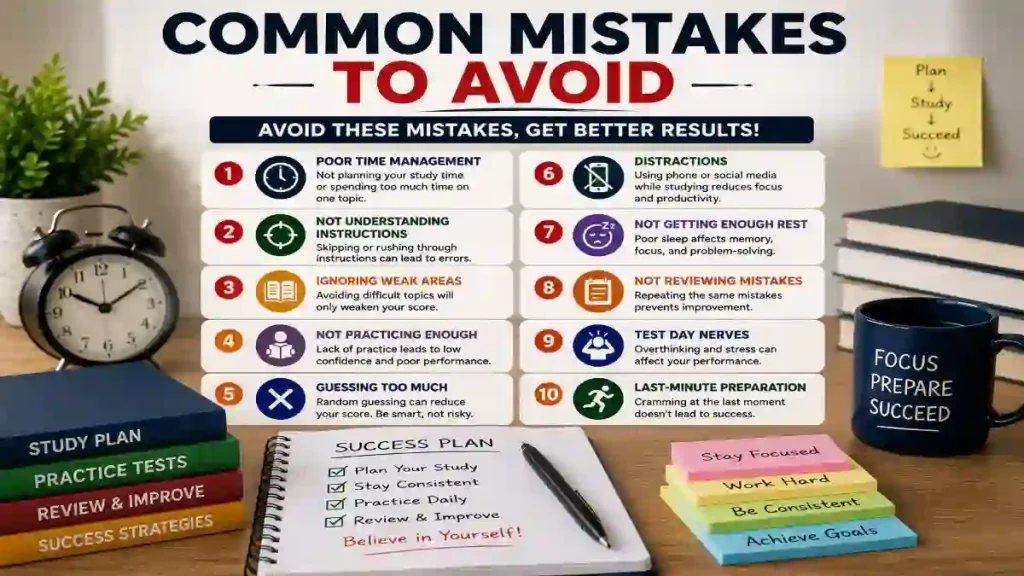
- Studying without a plan
- Ignoring weak areas
- Not taking full-length practice tests
- Memorizing words without understanding usage
- Skipping review of past mistakes
- Comparing your progress with others instead of your own growth
Avoiding these mistakes alone can improve your score significantly, even without studying extra hours. Focus on steady, consistent progress rather than short bursts of intense study followed by long breaks.
Conclusion
This GRE Study Guide gives you a simple and clear way to prepare. Focus on one section at a time, follow your weekly plan, and practice consistently. The GRE is not about being perfect. It’s about being prepared. Stay consistent, review your mistakes, and you will pass with confidence.
FAQs
1. How long should I study for the GRE?
Most students need 2 to 3 months of steady preparation.
2. What is a good GRE score?
A score above 310 is considered competitive for most graduate programs.
3. Is GRE math hard?
No, GRE math covers basic to intermediate level concepts. Regular practice makes it manageable.
4. Can I improve my vocabulary quickly?
Yes, daily flashcard practice with 10 new words works well over time.
5. What should I do the night before the GRE?
Relax, sleep early, and avoid last-minute cramming.
