
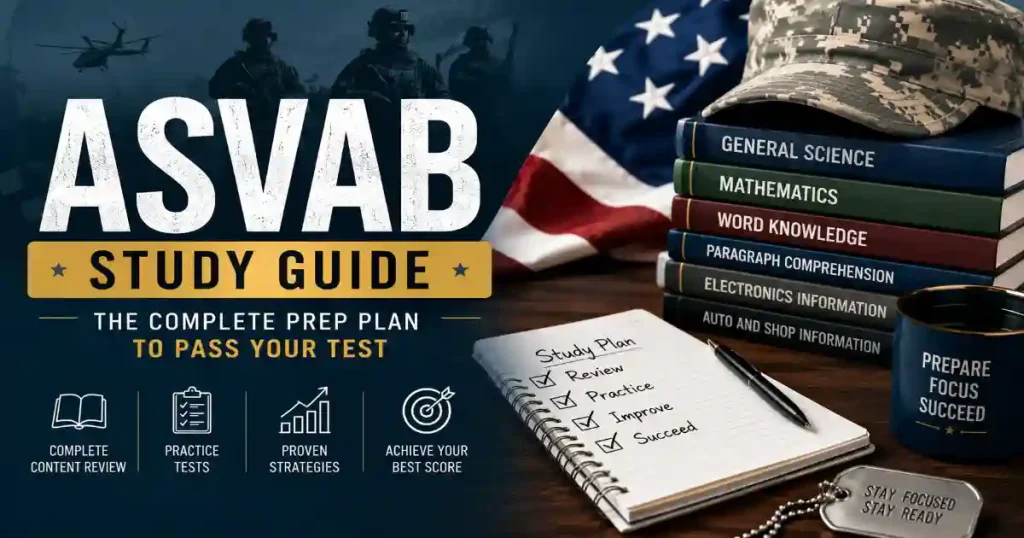
This ASVAB Study Guide will show you what you need to know before taking the test. It covers the main test sections, explains how ASVAB scores work, and gives you a simple study plan you can follow. You’ll also learn useful tips for managing your time, practicing questions, and improving the subjects you find difficult. No matter what military job you want, your ASVAB score can play an important role in your future. That’s why it’s important to start preparing early, stay consistent, and take your studying seriously from day one.
What Is the ASVAB?
The ASVAB is a test with many choices for each answer. It checks how good you are at math, science, and words. Every part of the military uses it. That means the Army, Navy, Air Force, Marines, Coast Guard, and Space Force. They use it to:
- See if you can join the military
- Find your AFQT score
- Pick the right job for you
Some people take a home version first. It is called the PiCAT. Later, they take a shorter test to check that score. No matter which version you take, the questions and scoring work the same way. This ASVAB Study Guide can help you understand the differences between the PiCAT and the regular ASVAB, so you know what to expect and how to prepare.
Where and How the ASVAB Is Taken: ASVAB Study Guide
You can take the test at a place called MEPS. You can also take it on a computer at a testing center. This is called the CAT-ASVAB. Or you might take it on paper at your school. This is called the P&P-ASVAB.
MEPS vs. MET Site Testing
MEPS uses the computer test. It gives you your score faster. MET sites are often at schools. They usually use the paper test instead.
ASVAB Test Sections
The ASVAB has nine smaller tests inside it. Here is what each one checks:
| Subtest | What It Checks |
| General Science (GS) | Simple science facts |
| Arithmetic Reasoning (AR) | Math word problems |
| Word Knowledge (WK) | Knowing what words mean |
| Paragraph Comprehension (PC) | Understanding what you read |
| Mathematics Knowledge (MK) | Math like algebra |
| Electronics Information (EI) | Wires and electricity |
| Auto & Shop Information (AS) | Cars, tools, and shop work |
| Mechanical Comprehension (MC) | How machines work |
| Assembling Objects (AO) | Fitting shapes together |
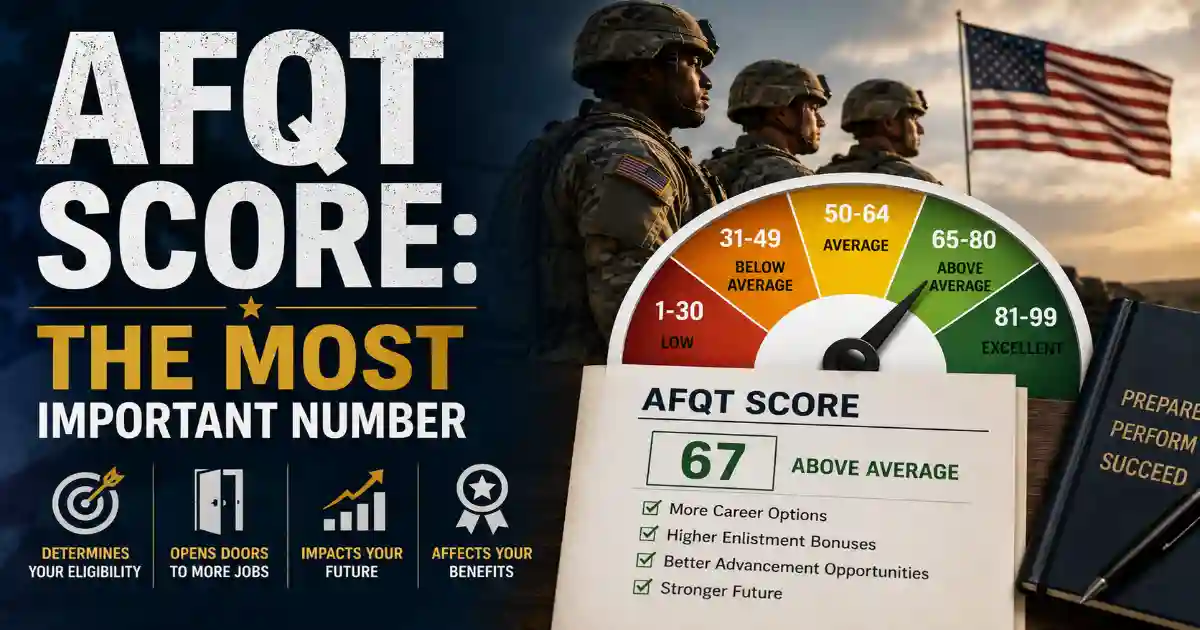
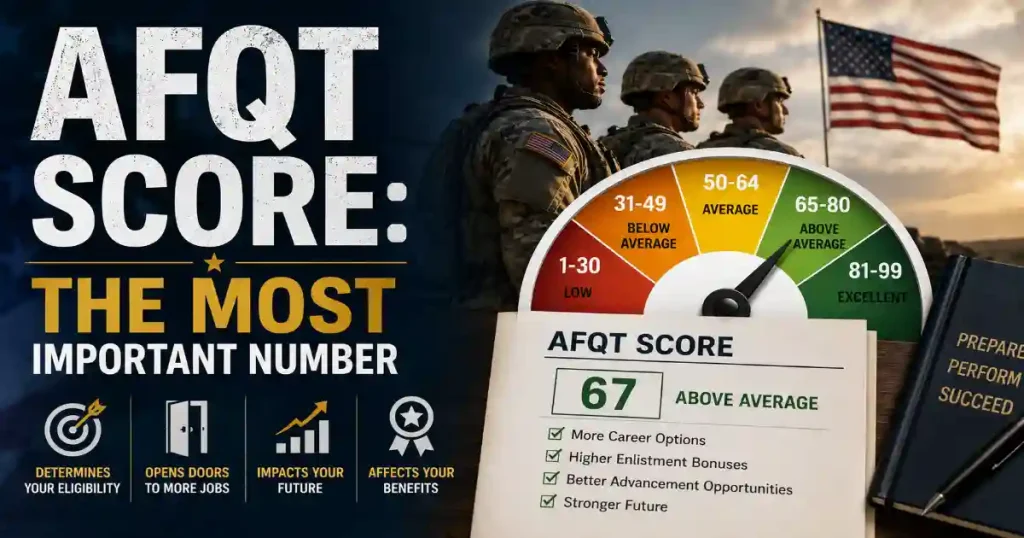
AFQT Score: The Most Important Number
Four of the tests matter the most. They make your AFQT score:
- Arithmetic Reasoning (AR)
- Mathematics Knowledge (MK)
- Word Knowledge (WK)
- Paragraph Comprehension (PC)
This score is a number from 1 to 99. It shows how you did next to other people who took the test.
Minimum AFQT Requirements by Branch
- Army: 31
- Navy: 35
- Air Force: 36 (the hardest one)
- Marine Corps: 32
- Coast Guard: 40
Line Scores: What Decides Your Job
Your other scores are called line scores. These help pick your job. Maybe you will fix cars. Maybe you will work in medicine. Maybe you will work with electronics. This ASVAB Study Guide can help you understand how these scores affect your career options and what areas you should focus on while preparing. That is why you should study for every part of the test, not just the four main ones.
How to Prepare: A Realistic Study Plan
Step 1: Take a Practice Test First
Before you study anything, take one full practice test. This shows you what you already know. It also shows what you still need to learn.
Step 2: Build a 4–6 Week Study Plan
A plan works better than studying with no order. Here is an example:
- Week 1–2: Study math (Arithmetic Reasoning + Mathematics Knowledge)
- Week 3: Study words and reading
- Week 4: Study tools, science, and machines
- Week 5: Take full practice tests with a timer
- Week 6: Review your weak spots, then rest before test day
Step 3: Study the Most Important Parts First
AR, MK, WK, and PC make up your AFQT score. Study these first. A good AFQT score keeps you eligible, even if you’re weaker in other areas.
Step 4: Use Good Study Materials
Use real ASVAB practice tests and books. You can also use the official ASVAB CEP website. Don’t use old or fake question banks.
Step 5: Practice With a Timer
The CAT-ASVAB has time limits. The questions also get harder or easier based on your answers. Practicing with a timer helps you feel less nervous on test day.
Step 6: Learn From Your Mistakes
Don’t just look at your score. Ask yourself why you got a question wrong. If you keep making the same mistake, fix that problem first.
Step 7: Rest, Too
Studying too long can hurt you, not help you. Study for 45 to 60 minutes, then take a break. Short study sessions with breaks work better than long ones.

Quick Tips for Test Day
- Sleep well the night before
- Eat a small meal not too much, not too little
- Read each question carefully. You can’t go back on the CAT test.
- Don’t get stuck on one hard question
- Stay calm. A smart guess is better than no answer.
Common Mistakes to Avoid
- Only studying math and skipping words and reading
- Skipping tool and science questions
- Cramming the night before instead of studying a little each day
- Not practicing with a timer
- Using only one old study guide
Conclusion
The ASVAB is not trying to trick you. It just wants to see what you are good at. This helps the military give you the right job. If you make a study plan and stick to it, you can get a good score. Start early. Study often. Take your practice tests seriously, just like the real one.
Remember, your ASVAB score is not just a pass or fail. It helps shape your whole career. A good ASVAB Study Guide can help you stay organized, focus on the right subjects, and prepare with confidence. A few weeks of hard work now can open the door to better jobs later.
FAQs
1. How long should I study for the ASVAB?
Most people study for 4 to 6 weeks. This can change based on how much you already know.
2. What is a good ASVAB score?
A score above 50 is good, while a score above 65 can open up even more job choices. Using an ASVAB Study Guide can help you understand the scoring system, focus on the right subjects, and prepare effectively for a higher score.
3. Can I take the test again if I don’t pass?
Yes! Wait 30 days to try again the first time. Wait 30 more days for a third try. After that, you wait 6 months.
4. Is the ASVAB hard?
It’s not too hard if you study. Knowing math, reading, and science really helps.
5. Does my ASVAB score expire?
Yes. Your score is good for 2 years after you take the test.
