
Getting a Commercial Driver’s License (CDL) opens the door to careers in trucking, delivery, and transportation, but before you can hit the road, you have to pass the CDL exam. For first-time test takers, the process can feel overwhelming: multiple test sections, unfamiliar terms, fees, and a lot riding on one exam day
This CDL study guide breaks the entire process into simple, manageable steps, so you know exactly what to expect, how much it costs, and how to prepare with confidence. Whether you’re just starting your research or ready to dive into studying, this CDL study guide will walk you through everything step by step.
What Is the CDL Exam? (CDL Study Guide Basics)
The CDL exam is a two-part process required to legally operate commercial vehicles such as trucks, buses, and tractor-trailers. It includes:
- A written knowledge test, covering rules, safety procedures, and vehicle operation
- A skills test, where you demonstrate vehicle inspection, basic control, and on-road driving
Both parts must be passed before you can receive your CDL.
Who Needs a CDL?
You generally need a CDL if you plan to drive:
- Vehicles weighing over 26,001 pounds
- Cars built to accommodate sixteen or more people
- Vehicles transporting hazardous materials
If your job involves operating large trucks, buses, or hazmat carriers, a CDL isn’t optional; it’s a legal requirement.
Types of CDL Licenses
Choosing the right CDL class depends on the type of vehicle you plan to drive and the job you’re aiming for.
| CDL Class | Vehicle Type | Common Jobs |
| Class A | Combination vehicles (tractor-trailers) | Long-haul trucking |
| Class B | Single large vehicles (buses, dump trucks) | Local delivery, bus driving |
| Class C | Smaller vehicles carrying passengers or hazmat | Passenger vans, small hazmat carriers |
Most long-haul trucking jobs require a Class A CDL, since it covers the widest range of vehicle combinations.
CDL Written Test Sections
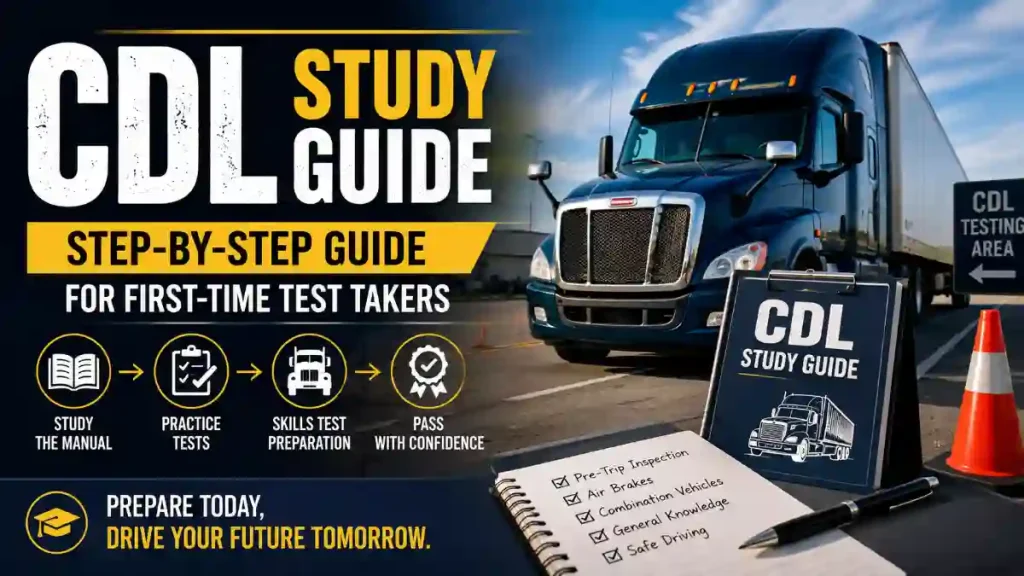
The CDL written knowledge test is divided into sections, and most first-time applicants are required to pass at least the General Knowledge test before moving on to specialized sections. A CDL Study Guide can help applicants prepare for each section and understand what to expect on the test.
General Knowledge Test
This section covers the basics every commercial driver must know: safe driving practices, vehicle systems, traffic laws, and general road safety principles. It’s required for all CDL applicants, regardless of class.
Air Brakes Test
Required if your vehicle has air brakes (most large trucks do). It covers how air brake systems work, common warning signs of brake failure, and how to inspect them properly before driving.
Combination Vehicles Test
Needed for anyone driving a tractor-trailer or similar combination vehicle. This section focuses on coupling, uncoupling, and handling multi-unit vehicles safely, especially during turns and backing maneuvers.
Endorsement Tests (If Needed)
Depending on your job, you may also need endorsements such as:
- Hazmat (H) — for transporting hazardous materials
- Passenger (P) — for driving buses
- Tanker (N) — for hauling liquids in bulk
- Doubles/Triples (T) — for pulling multiple trailers
Each endorsement has its own separate test, so only study the ones relevant to the job you’re targeting.
How Much Does Obtaining a CDL Cost?
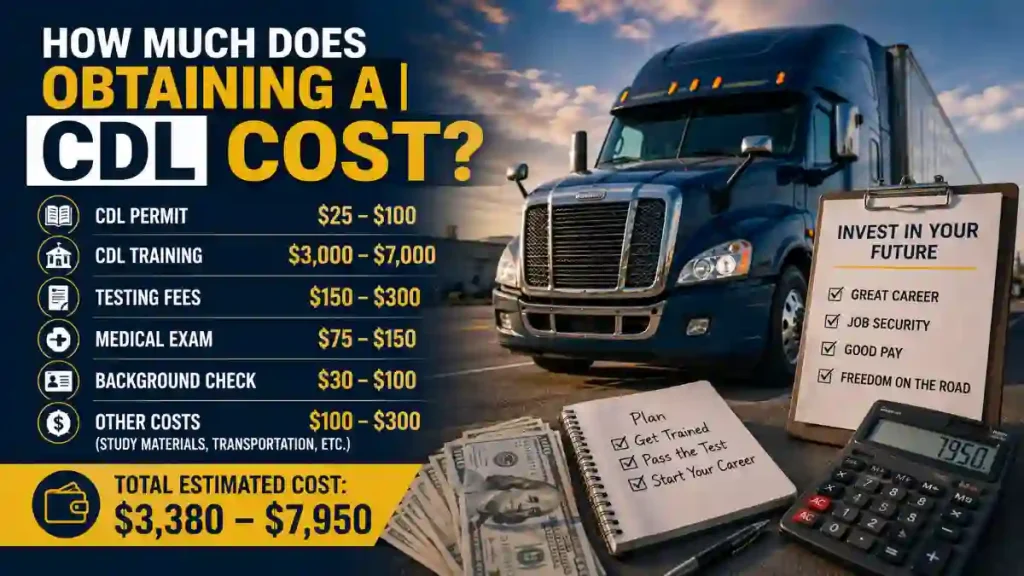
Costs vary by state and whether you attend a CDL training school, but here’s a general breakdown:
- CDL permit fee: Usually $10–$100
- CDL license fee: Typically $50–$200
- CDL training school (optional): $3,000–$7,000, depending on the program length
- Skills test fee: Often charged separately, around $50–$150
Some trucking companies offer sponsored CDL training in exchange for a work commitment, which can significantly reduce upfront costs. A CDL Study Guide can also help you prepare before starting sponsored training, making it easier to understand the material and pass the required tests. It’s worth researching this option if the training fees feel out of reach.
How to Get Ready for the Written CDL Exam
Passing the written test comes down to consistent, focused preparation rather than last-minute cramming. Here’s a simple approach that works well for most first-time test takers:
- Study your state’s CDL manual — nearly all test questions come directly from it
- Take practice tests regularly — this builds familiarity with question formats and timing
- Focus on weak areas — review the sections you keep getting wrong instead of only re-reading what you already know
- Study in short, daily sessions — 30–45 minutes a day is often more effective than cramming everything in one sitting
- Use flashcards for road signs — sign recognition questions are common and easy to miss without practice
Common Mistakes First-Time Test Takers Make
- Skipping the CDL manual and relying only on random online quizzes
- Not studying the air brakes section, even when it’s required for their vehicle
- Underestimating the skills test and only preparing for the written exam
- Awaiting the final few days to begin studying
- Ignoring endorsement requirements until test day
Avoiding these mistakes alone can significantly improve your chances of passing on the first attempt.
CDL Skills Test (Behind-the-Wheel)
Once you pass the written test, you’ll move on to the skills test, which has three parts.
Vehicle Inspection
You’ll be asked to walk around the vehicle and explain what you’re checking: tires, lights, brakes, fluid levels, mirrors, and more. A CDL Study Guide can help you review these inspection points and understand why each check matters, not just how to point at the parts.
Basic Control Skills
This tests your ability to maneuver the vehicle in a controlled setting, including backing up in a straight line, offset backing, and parallel parking depending on your state’s requirements.
On-Road Driving
Here, an examiner rides along as you drive in real traffic conditions, checking your ability to follow rules, signal properly, merge safely, and stay in control of the vehicle throughout the route.
CDL vs. Regular Driver’s License
| Feature | Regular License | CDL |
| Vehicle weight limit | Under 26,001 lbs | Over 26,001 lbs |
| Written test complexity | Basic road rules | Vehicle-specific systems, air brakes, combination vehicles |
| Skills test | Simple driving test | Detailed inspection, backing maneuvers, road test |
| Endorsements | Not applicable | Required for hazmat, passengers, tankers |
Understanding these differences helps set realistic expectations. A CDL exam is noticeably more detailed than a standard license test.
Tips to Pass Your CDL Exam on the First Try
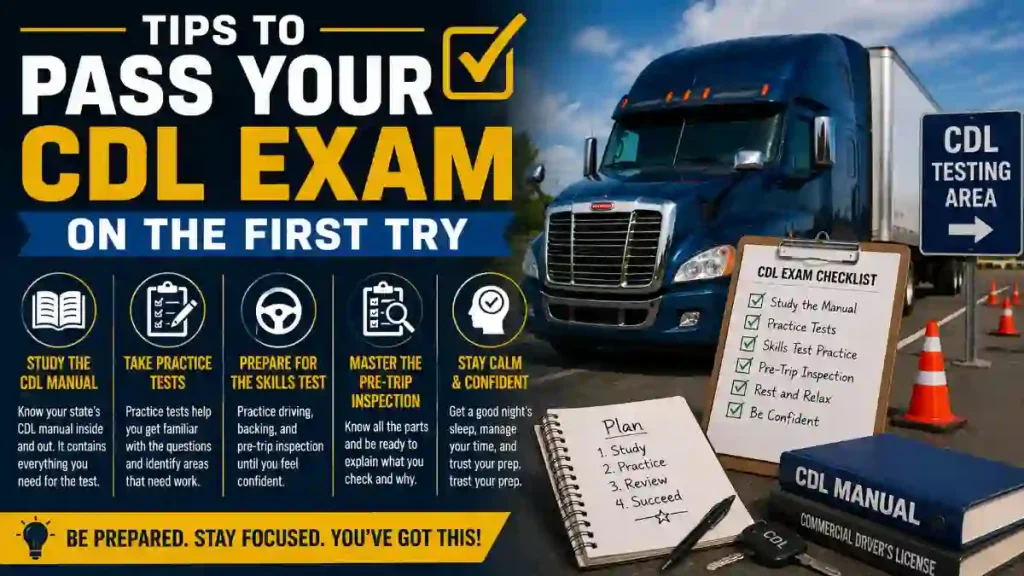
- Get a full night’s sleep before test day
- Review your state’s CDL manual one final time the night before
- Practice the vehicle inspection out loud, not just in your head
- Arrive early to reduce stress and last-minute rushing
- Bring all required documents (ID, permit, medical certificate, etc.)
- Stay calm during the skills test; examiners often deduct more points for panic-driven mistakes than small technical errors.
Conclusion
Passing the CDL exam doesn’t have to be stressful, especially when you break it down into clear steps. Start with your state’s CDL manual, understand the costs involved, use a CDL Study Guide and practice tests to reinforce what you learn, and don’t skip the skills test preparation. With consistent study and the right approach, first-time test takers can walk into exam day feeling confident, prepared, and ready to start their new career on the road.
FAQS
1. How many questions are on the CDL written test?
Most states include around 50 questions on the General Knowledge test, though this can vary slightly by state.
2. What is the passing score for the CDL exam?
Typically, you need to score at least 80% to pass the written test, though exact requirements depend on your state.
3. How long does it take to prepare for the CDL test?
Most first-time applicants spend 2–4 weeks studying, depending on prior driving experience and available study time.
4. Can I retake the CDL exam if I fail?
Yes, most states allow retakes, though there may be a waiting period and additional fees.
5. Do I need a CDL permit before taking the skills test?
Yes, you must pass the written knowledge test and hold a CDL permit before scheduling your skills test
