

Hey, I want to share something that happened to me recently about how to study effectively.
I was chatting with a friend when I suddenly came across this topic.
At first, I wasn’t sure about the best way to approach it, and I kept wondering, “Am I missing something here?” However, I didn’t want to study the wrong way or waste my time.
Therefore, I decided to learn more about how to study effectively, including the best methods and techniques.
As a result, I realized how important it is to use the right study strategies, manage your time wisely, and stay focused while learning.
Why Good Study Tips Matter

Studying for many hours does not always mean better results. Instead, what matters most is how you study, not just how long you study. For example, a student who studies for 2 hours using smart techniques can learn more than someone who studies for 5 hours without a clear plan.
That is why learning how to study effectively is so important. In addition, it helps you save time and improve your ability to remember information. Moreover, the right study methods can make learning feel less tiring and stressful. As a result, once you build good study habits, studying becomes easier, more productive, and even enjoyable.
H2: 15 Proven Tips to Study Effectively
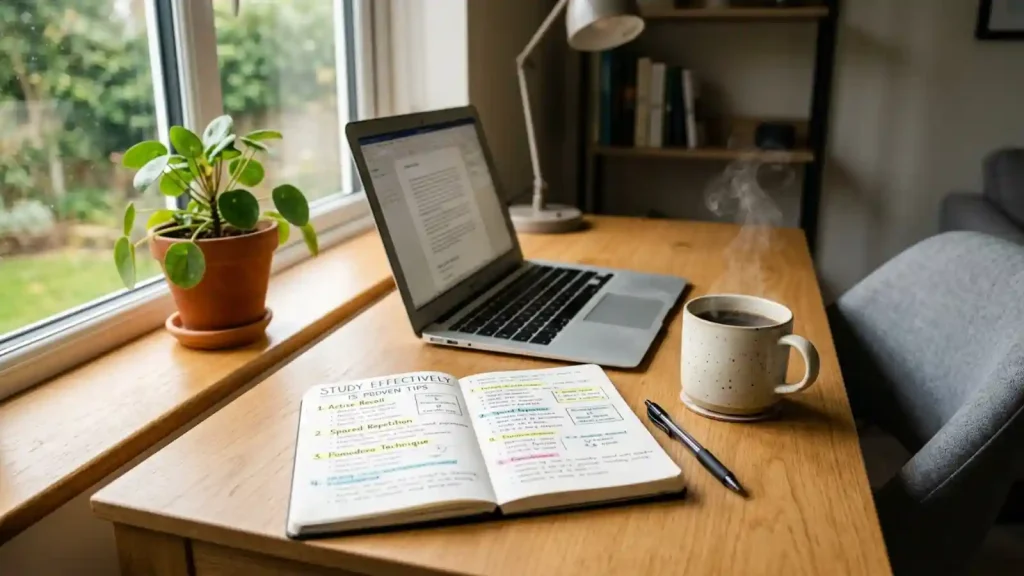
H3: 1. Make a Simple Study Plan
Before you start studying, write down what you want to study today. A short list works best. This helps you know exactly what to do instead of feeling lost.
- Pick 2 or 3 topics for the day
- Write the time you will spend on each topic
- Keep the plan short, clear, and realistic
2. Study in a Quiet Place
Noise makes it hard to focus. Even small sounds, like a TV or people talking, can break your concentration. Pick a quiet room or a calm corner where no one disturbs you while you study.
3. Keep Your Phone Away
Your phone is one of the biggest distractions for students. One notification can turn 10 minutes of study into 30 minutes of scrolling. Turn your phone off, or keep it in another room while you study.
4. Take Short Breaks
Your brain gets tired after some time, just like your body does. Study for 25 minutes, then take a 5-minute break. This simple method is called the Pomodoro Technique, and it helps you stay fresh for a longer time.
5. Test Yourself Often
Instead of just reading your notes again and again, try to remember the answer without looking at the book. This is called active recall. It works much better than simply reading the same page many times.
6. Use Flashcards
Flashcards are a great tool for remembering facts, dates, and formulas quickly. On one side of the card, write a question; on the other, write the resp.se.. Test yourself with them daily.
7. Explain It in Your Own Words
If you can explain a topic in simple words, like teaching it to a younger friend, it means you truly understand it. If you get stuck while explaining, that topic needs more practice.
8. Study a Little Every Day
First of all, do not wait for the exam date to come close. Instead, studying a little every day is much better than trying to study everything at once the night before. Moreover, small daily efforts help build a strong memory over time. As a result, you can remember information more easily and feel more prepared when the exam arrives.
9. Mix Up Subjects
Do not study the same subject for too many hours in a row. Switching between subjects keeps your brain interested and helps you avoid feeling bored or tired.
10. Get Enough Sleep
Therefore, get 7 to 8 hours of sleep every night. During exams, avoid skipping sleep to study more because it can hurt your focus and memory.
11. Eat Healthy Food
Your brain needs good food to work properly. Eat fruits, nuts, and simple healthy meals. Drink enough water too. Junk food and sugary drinks can make you feel tired and less focused.
12. Use Colors and Pictures
Underline important points using colors. Draw simple diagrams or charts for hard topics. Bright colors and pictures help your brain remember information faster and for a longer time.
13. Practice Old Question Papers
In addition, solving old exam papers helps you understand the types of questions that usually appear. Furthermore, it allows you to manage your time better during the exam. As a result, regular practice can build your confidence and help you feel more prepared for the real exam.
14. Set Small Goals
Instead of saying, “I will finish the whole book today,” say, “I will finish one chapter today.” Small goals feel easier to reach, and finishing them gives you a sense of progress.
15. Stay Positive
Believe that you can do it. A calm and positive mind learns faster than a stressed and worried mind. If you make a mistake, do not be too hard on yourself. Learn from it and move forward.
H2: Quick Summary Table
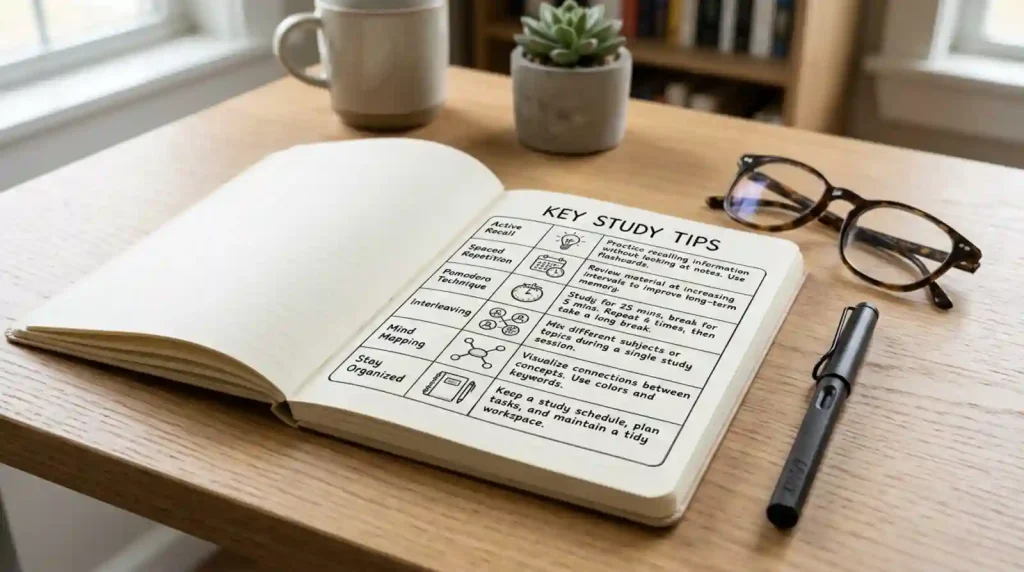
| Tip Number | Tip | Why It Helps |
| 1 | Make a study plan | Saves time and gives clear direction |
| 4 | Take short breaks | Keeps the brain fresh and active |
| 5 | Test yourself | Improves memory and understanding |
| 8 | Study a little daily | Builds strong long-term memory |
| 10 | Sleep well | Helps the brain store information |
| 15 | Stay positive | Reduces stress and improves focus |
Conclusion
Learning how to study effectively does not need any magic trick. It only needs small, smart habits, like the 15 tips shared above. You do not have to use all of them at once. Start with just 2 or 3 tips this week. Once they become a habit, slowly add a few more.
Finally, remember that studying smart is always better than studying hard for long hours without a plan. With the right study habits, you can learn faster, remember more, and feel much less stressed before exams. Therefore, using effective study techniques can help you become a more confident and successful student.
FAQs:
1. What is the best tip to study effectively?
Testing yourself often, also called active recall, is one of the best tips. It helps your brain remember information for a much longer time compared to just reading.
2. How long should a student spend studying each day?
There is no fixed number of hours for everyone. Studying with full focus for 2 to 4 hours is often better than studying for many hours without any focus.
3. Why do I forget what I study soon after?
This usually happens when you only read the material without testing yourself. Using flashcards and self-testing regularly helps you remember information much better and for a longer time.
4. Is it good to study at night?
Some students focus better at night, while others learn best in the morning. Try both times and choose the one when your mind feels most fresh and alert.
5. How can I maintain concentration when I’m studying?
Keep your phone away, sit in a quiet place, and take short breaks between study sessions. These simple habits help you stay focused for a much longer time.
Continue Reading:
- GED Study Guide 2026: A Simple Way for Beginners to Pass the Test
- RBT Exam Study Guide: Complete Beginner’s Guide to Pass on Your First Try
- How to Study for Exams: A Complete Guide to Studying Smarter and Scoring Higher
